On October 26, 2026, Division One of the Washington Court of Appeals revived a lawsuit against the City of Seattle over its rental rules. The owner of the Addison on Fourth, a 254-unit affordable apartment building in Seattle’s Chinatown-International District, says the city’s rules, taken together, have so damaged the building’s finances that they amount to an unconstitutional “taking” of its property. A trial judge dismissed the case in 2025. A three-judge appeals panel, with no dissent, sent it back. (Court of Appeals opinion)
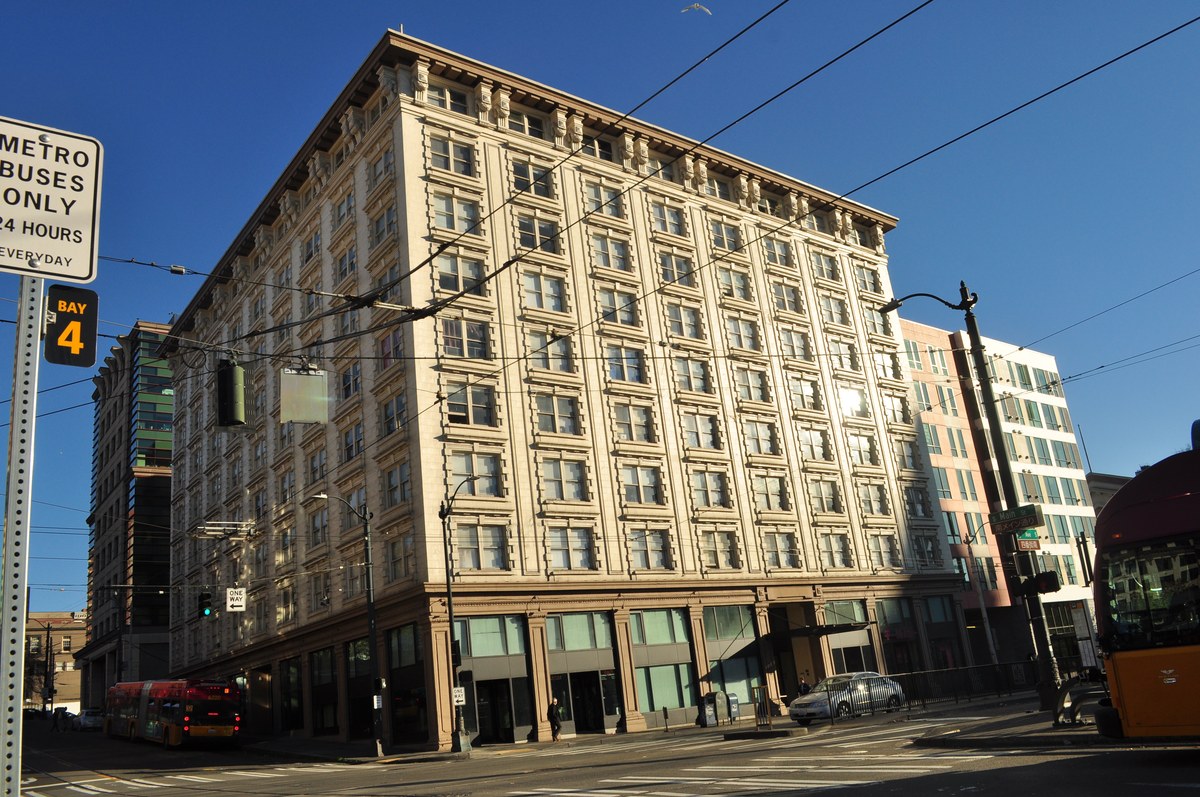
This case doesn’t change your lease tomorrow. But it shows where courts may look at rental regulation, and why good records matter. We’ll also cover the rules that do apply to Kitsap landlords today.
The Short Version
- The owner, GRE Downtowner LLC (a Goodman Real Estate company), sued Seattle in October 2024 over a set of city rules passed between 2018 and 2021. (Opinion)
- A King County judge dismissed the case on February 21, 2025, before any evidence was gathered. The Court of Appeals reversed and sent it back to the trial court. (Opinion)
- The court did not decide that Seattle owes anyone money. It decided the owner has pleaded enough to be allowed to try to prove its case.
- The most closely watched piece: the court said the owner pleaded enough to argue that Seattle’s Roommate Ordinance is a “physical taking.” (Seattle Times)
The Building and the Owner’s Claims
GRE bought the Addison in 2012 for $12.5 million and put another $26.5 million into renovations so it could join the federal Low-Income Housing Tax Credit (LIHTC) program. LIHTC restricts rents in exchange for tax credits, for at least 30 years. (Opinion)
According to the owner’s court filings, the building made money from 2015 through 2018, collecting about 91% to 94% of its maximum possible rent. Collections then fell, to about 44% by 2023, and vacancy peaked near 45%. The owner says the building lost roughly $5.8 million from 2019 through 2023, when it would have been about $1.55 million in the black if conditions had stayed as projected. The owner also says it can’t pay its mortgage and is in default. (Opinion; Seattle Times)
These are the owner’s allegations, and a court has not yet tested them. The Seattle Times reports the city’s lawyers argue that the LIHTC rent limits, not city rules, restrict what the owner can do with the building. (Seattle Times)
Seattle passed these rules to protect renters as housing costs climbed. Tenant advocates say they help balance the scales between landlords and renters. (Seattle Times)
The six city rules challenged
| Rule | Year |
|---|---|
| Fair Chance Housing Ordinance (limits how landlords may use criminal history in rental decisions) | 2018 |
| Roommate Ordinance (extends occupancy rights to a tenant’s immediate family and an additional resident) | 2019 |
| Winter eviction ban (Dec. 1 to Mar. 1, with limited exceptions) | 2020 |
| COVID-19 eviction moratorium (a city resolution) | Mar. 2020 to Feb. 2022 |
| 180-day notice for rent increases (up from 60 days) | 2021 |
| Economic displacement relocation assistance (landlord-paid help when a large rent increase pushes a tenant out) | 2021 |
Source: Court of Appeals opinion
The owner’s key argument: no single rule is the problem. It’s the combined weight of all of them on this one building.
What Is a “Taking,” in Plain English?
The U.S. and Washington constitutions say the government can’t take private property without paying for it. A regulatory taking is the harder version: the government doesn’t seize the property, but its rules burden it so heavily that the effect is similar. Courts are cautious about these, because not every drop in value requires payment. They weigh the rules’ economic impact, what a reasonable owner expected when they bought, and the character of the government action. A physical taking, where a rule forces an owner to accept physical occupation, is a separate and stricter category that doesn’t require the same showing of economic harm.
What the Court Actually Decided
Because the case was dismissed before any evidence was gathered, the court assumed the owner’s allegations are true. So the opinion is about whether the owner may try to prove its case, not whether it has. (Opinion)
1. The money question belongs at trial. Seattle argued the losses come from the LIHTC rent limits the owner accepted. The court noted the building can’t be anything but low-income housing for at least 23 more years, and said weighing that evidence now is premature.
2. Entering a regulated field doesn’t mean giving up your rights. Without more, the court said, that doesn’t make an owner’s expectations unreasonable.
3. A good cause isn’t the end of the analysis. A takings claim looks at how heavy the burden is and who bears it, not only whether the city’s goals were worthy.
4. The Roommate Ordinance may be a physical taking. Normally, a landlord who invites tenants in can’t claim a physical taking. But this ordinance gives occupancy rights to a tenant’s immediate family, an additional resident, and that resident’s family. The court said the ordinance “transforms uninvited, third-party tenants into tenants” at the landlord’s expense, and relied on the U.S. Supreme Court’s 2021 Cedar Point Nursery decision about the right to exclude. (Opinion; Seattle Times)
5. Owners get six years to file. Washington law was unclear on the deadline. The court chose six years, which made the suit timely.
What This Ruling Does Not Do
- The owner hasn’t won. It has earned the chance to gather evidence and go to trial. Seattle can still argue that LIHTC limits or other factors explain the losses.
- No Seattle rule has been struck down. They all remain in effect.
- It may not be the final word. Seattle’s city attorney’s office told the Seattle Times, “We’re reviewing the decision and are meeting internally to discuss next steps. We haven’t made a decision on an appeal yet.” That was the latest reporting we found (Oct. 29). A request for Washington Supreme Court review is generally due within 30 days of the decision. (Seattle Times)
- It doesn’t address Washington’s statewide rent law. The case is about Seattle’s rules.
- Other challenges have often failed. The Seattle Times notes landlords have challenged these rules repeatedly, “often losing early in the process.” For example, in 2023 the Ninth Circuit rejected a Cedar Point argument against Seattle’s COVID eviction restrictions. (Seattle Times; El Papel v. Seattle, 9th Cir. 2023)
What Applies Here in Kitsap: Washington’s Rent Stabilization Law
Seattle’s rules don’t apply in Kitsap County. But a statewide rent law does, and it’s the one to know. In 2025, Washington passed House Bill 1217 (now RCW 59.18.700 and following), effective May 7, 2025. In plain words:
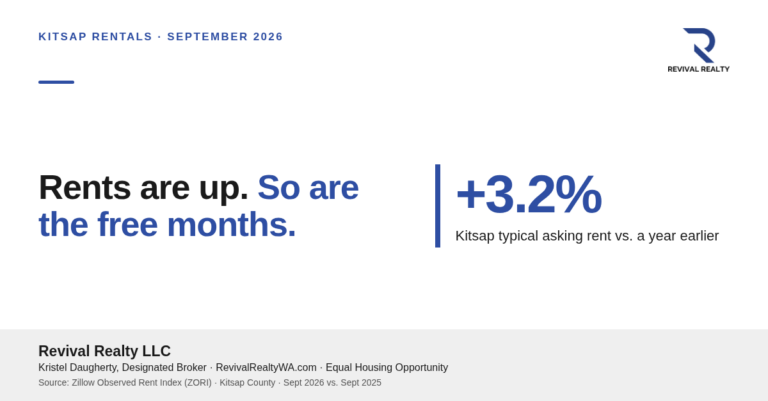
- There’s a cap on rent increases. Over any 12 months, rent can go up by no more than 7% plus inflation, or 10%, whichever is less. The Department of Commerce publishes the number every year. For 2026 it’s 9.683%. For 2027 it’s 10% (the formula came out to 11.53%, so the 10% ceiling applies). (Commerce; RCW 59.18.700)
- No increase in the first 12 months of a tenancy. You can reset the rent when a tenant moves out and the tenancy ends. (RCW 59.18.700)
- 90 days’ written notice is required for most rent increases. Subsidized tenancies where rent is income-based need 30 days. (RCW 59.18.140)
- Some housing is exempt. That includes buildings whose first certificate of occupancy was issued 12 or fewer years before the notice, certain public, nonprofit and tax-credit affordable housing, and some owner-occupied situations (not available if the owner is a REIT, a corporation, or an LLC with a corporate member). If you claim an exemption, the rent increase notice must state the facts supporting it. (RCW 59.18.710)
- The Attorney General enforces it, and a tenant can demand that an unauthorized increase be reduced. (AG; RCW 59.18.700)
Kitsap County’s housing resources point to this same statewide rule. (Kitsap County) Cities can add rules of their own, so check your city before you raise rents or buy.
Seattle’s rent-increase notice is 180 days, while the statewide rule is 90. The point isn’t which is right. It’s that rules vary by city and change over time, so underwrite accordingly.
Three Scenarios to Think Through
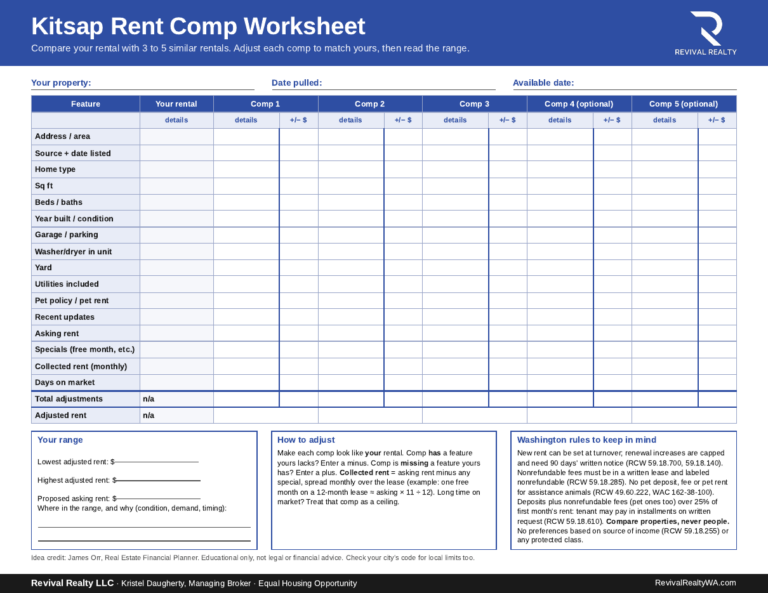
Scenario 1: You’re evaluating a small multifamily purchase. Put regulatory risk in your underwriting next to cap rate and deferred maintenance. Ask: What state and local rental rules apply? Are any proposed? How would the rent cap, a longer notice period, or relocation-assistance rules change your numbers? The Addison shows how several individually manageable rules can add up. Our Kitsap Rent Comp Worksheet is a good place to start your rent assumptions.
Scenario 2: You already own rentals. Keep clean, year-by-year operating records: collections, vacancy, bad debt, and expenses. The owner in this case got through the first round partly because its complaint laid out those numbers against its original projections. Whether or not you ever pursue a claim, clean records help you make better hold-or-sell decisions and show buyers what the property really does. Apply the same written rental criteria to every applicant, and run changes to your screening or rent-increase process by a Washington landlord-tenant attorney.
Scenario 3: You’re considering affordable or income-restricted housing. Long-term rent restrictions limit your flexibility to absorb new costs. Stress-test the deal against regulatory changes you can’t control, and talk with a lender and an attorney who know those programs.
The Bottom Line
The Addison ruling doesn’t mean rental regulations are going away, and it doesn’t guarantee the owner anything. It says a well-documented, property-specific claim about the combined effect of rules can get a day in court. For most Kitsap investors, the lesson is simpler: know the rules where you invest, underwrite for change, and keep records that tell your property’s financial story clearly.
If you’re weighing a rental purchase in Kitsap, or want to talk through how current rules might affect a property you own, call or text me at 360-317-0113. I’m glad to walk through it with you.
This article is for general educational purposes and is not legal advice. Takings law and landlord-tenant law are complex and fact-specific, and rules change. Consult a Washington-licensed attorney about your situation. Revival Realty LLC, Managing Broker Kristel Daugherty, 360-317-0113. Equal Housing Opportunity.